


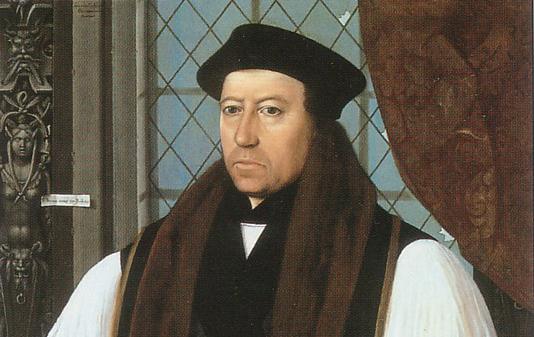
Thomas Cranmer (1489-1556)
AS Britain’s first protestant archbishop of Canterbury Aslockton-born Thomas Cranmer introduced the English bible into parish churches, assisted Henry VIII in his marital affairs and was burned for heresy by Mary I.
Born to Thomas and Agnes Cranmer (Hatfield), Cranmer was destined for a career in the church as his father, who belonged to the lowest rank of the gentry.
At 14 he went to Cambridge and in 1510 was elected to a fellowship at Jesus College but left after marrying the relative of a landlady.
However his wife died in childbirth and he was restored to the fellowship, becoming a leading figure in the English reformation and by 1525, with a desire for the abolition of papal power in England.
When Cranmer left Cambridge in 1529, to escape a sweating sickness, he stayed with relations in Waltham, Essex, where the King’s chief councillors were lodging.
Their discussions turned to Henry’s wish to divorce Catherine of Aragon which Cranmer believed he had the right to do. This resulted in him being commissioned by the King to write a propaganda treatise supporting divorce.
In 1532 he went to Germany to establish contact with the Lutheran princes and met a fellow theologian Andreas Osiander.
Despite his priest’s orders he married Osiander’s niece Margaret although he kept the marriage secret for 16 years. His enemies claimed he kept her in a wooden box with holes drilled in it.
In the same year he was appointed Archbishop of Canterbury and proceeded to do what was expected of him – declare the king’s marriage to Catherine of Aragon void and the marriage to Anne Boleyn, who was pregnant, valid.
He went on to invalidate the marriage after rumours of Anne’s adulteries, assisted in freeing the king from his fourth wife Anne of Cleves and was prominent in proceedings which lead to Catherine Howard’s execution for adultery.
In co-operation with Thomas Cromwell, he promoted the publication of the English Bible and saw it made compulsory in parish churches and although plots were laid to destroy him for heresy, they were foiled by the King’s affection for him. After the accession of Edward VI in 1547 Cranmer took a leading part in a more extreme brand of reformed religion, drawing up an overtly protestant Prayer Book.
In 1553 he subscribed to the dying King’s wish to transfer the succession from the Catholic princess Mary, Henry’s daughter by Catherine of Aragon, to his daughter-in-law Lady Jane Grey.
However she was deposed nine days later and the failure of the plot brought charges of treason against Cranmer and he was condemned by Mary’s government in 1553.
He was made to renounce his errors in public in an attempt to wreck Protestantism in England but disowned his recantation before he was burned at the stake in 1556, restoring heart to the reformers.
The Cranmer Arms in Aslockton is the only one in the country and bears his full heraldic arms including the bishop’s mitre.

Leave a Reply
You must be logged in to post a comment.